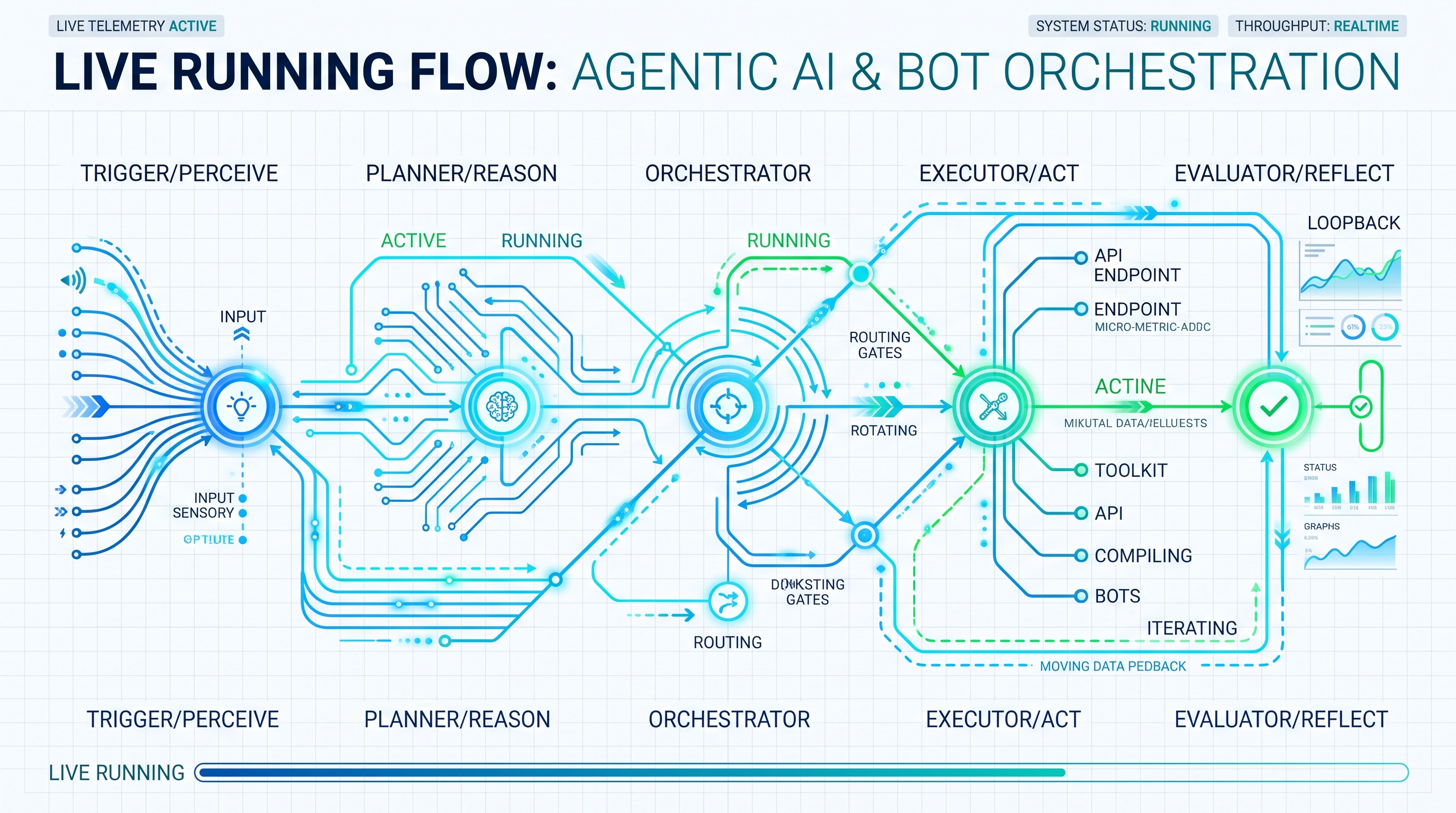
Engineered for high-velocity, deterministic, and NITYAKSHA - An AI Concierge Platform in pure Rust.
A sovereign, memory-safe AI concierge and multi-agent control plane. Complete with a self-contained Agent Memory Stack (ACID WAL, Dense SIMD Vectors, Sparse BM25, and Multimodal CAS), POSIX container sandboxes, physical loop breakers, and cryptographic HITL merge gates.
Engineered from first principles in pure Rust for deterministic enterprise AI agent execution.
Zero Python or Node.js runtime dependencies. Compiles to a single stripped binary under 2MB with sub-millisecond cold boot latency and under 3.5MB RAM footprint.
No PostgreSQL, pgvector, or Redis required. Features native Relational ACID WAL, Dense SIMD 384-dim float vectors, Sparse BM25 inverted index, and Multimodal CAS with MVCC version timelines.
Physical loop step counters enforce outer runtime budgets (CPU, RAM, time). Detects and forcefully terminates file thrashing and mutation oscillation loops after N iterations.
Short-lived Linux namespaces (Mount, UTS, IPC, PID, Net) coupled with Cgroups v2 quotas (`memory.max`, `pids.max`, `cpu.max`) preventing unconfined host mutation.
Mandatory cryptographic approval tokens intercept destructive actions (production git pushes, database drops, capital allocations). Pre-flight adversarial heuristics block prompt injections.
Standardized tool call and inference interfaces. Seamlessly switch between OpenAI, Anthropic, Gemini, DeepSeek, and local Ollama/LMStudio engines without changing execution code.
Instant out-of-the-box connectivity across 21+ global providers, specialized LPUs, local runtimes, and native Google OAuth 2.0 authentication for Gemini.
Authenticate directly with your Google Account using standard OAuth2 PKCE or Google Cloud Application Default Credentials (ADC). Features automated background token refresh, token vault encryption (0600), and sub-millisecond dispatch to Gemini 2.0 Flash and 1.5 Pro with 2M token context.
ntx auth login google or authenticate with 1 click in the WebUI.
Preconfigured subscription gateway with integrated Hermes 3 (405B, 70B, 8B) models, native web search, code interpreter, and reasoning tools.
Direct native adapters for Google Gemini 2.0 Flash, Claude 3.7 Sonnet, OpenAI GPT-4o/o3-mini, and DeepSeek V3/R1 with structured JSON handshaking.
High-throughput hardware acceleration delivering 500+ to 2,000+ tokens/second for ultra-low latency interactive concierge loops and real-time agents.
Zero external network calls, zero data leakage, and 100% data sovereignty. Runs quantized GGUF and AWQ models on consumer hardware or private VPCs.
Unified balance multi-model routing with OpenRouter, real-time live citation search via Perplexity Sonar, and enterprise Command R+ RAG grounding.
Corporate cloud compliance, IAM role delegation, VPC private endpoints, and SOC2/HIPAA enterprise isolation directly managed at the harness layer.
Specialized autonomous bot personas with dynamic system prompt hydration, strict tool whitelists, and isolated sandbox policies.
Master concierge supervising agent delegations, state checkpoints, and corporate policy governance.
Deep AST discovery, memory safety invariants, zero unwrap(), zero unsafe leaks, and sub-millisecond execution.
Manages CVD absorption, Killzones (London/NY UTC), liquidation bands, and Pine Script v6 matrix UDT verification.
Proactive prompt injection defender, credential leakage scrubber, and container namespace jail inspector.
Kernel panic diagnostic specialist, out-of-memory isolation, automated service remediation, and cgroups supervisor.
High-throughput content sanitizer eliminating conversational AI boilerplate, apologies, and repetitive throat-clearing.
Moving from single prompt completions to structured multi-agent graph orchestrations with cycle detection and HITL gates.
Isolates mutated functions via AST inspection, verifies zero unwrap() invariants, executes adversarial injection scan, suspends at Human-in-the-Loop merge gate, and applies changes inside a POSIX cgroup sandbox.
ntx workflow run wf-code-security-pipeline
Approval Token: NTX-APPROVE-PROD
Ingests market tick stream into lock-free ring buffer, computes volume delta absorption, executes 3-sigma tail-risk shock simulations, and enforces Capital HITL Gate before dispatching order.
ntx workflow run wf-quant-risk-deploy
Approval Token: NTX-APPROVE-ORDER
No PostgreSQL. No pgvector. No Redis. Built from the metal up in pure Rust for sub-millisecond edge and server workloads.
In-memory and disk-directory relational storage with write-ahead logging (WAL), atomic multi-agent session snapshots, and tamper-evident audit journals.
Hardware-accelerated AVX2/NEON float cosine distance calculations. Indexes millions of dense vectors directly on disk with fast edge caching.
Fused hybrid retrieval engine combining dense semantic embeddings with sparse BM25 inverted index with parameter-tunable alpha weightings.
SHA-256 CAS engine co-locating raw PDF papers, financial spreadsheets, technical charts, and screenshot media alongside conversational vectors.
Method of Loci spatial indexing organizing memories into Wings, Rooms, and Drawers for instant associative recall without context window pollution.
Cryptographic commit chains and parent-hash tracking enabling point-in-time delta rollbacks and time-travel trajectory audits.
Why enterprises deploy Nityaksha over legacy Python/Node agent harnesses.
| Security & Architecture Vector | Nityaksha Pure Rust Native | Legacy Python / Node Agent Frameworks |
|---|---|---|
| Runtime Cold Boot Latency | < 0.8 ms (Stripped Binary) | 4,500 ms – 12,000 ms (Interpreter + Virtualenv) |
| Daemon Memory Footprint | 3.3 MB RAM | 380 MB – 850 MB RAM per worker process |
| Database Dependencies | 0 External (Built-in Relational + Vectors + CAS) | PostgreSQL + pgvector + Redis + ChromaDB required |
| Sandbox Isolation Layer | Linux Namespaces (Mount, PID, Net) + Cgroups v2 | None or unconfined local subshell processes |
| Loop Breakers & Thrash Guards | Hardware physical loop counter & hash oscillation detector | Relies on soft LLM prompts (causes infinite billing loops) |
| HITL Merge Gates | Kernel-enforced cryptographic approval token intercepts | Ad-hoc python input() prompt prompts easily bypassed |
Direct technical answers regarding Nityaksha's architecture and deployment.
Yes. The entire control plane, AI harness, vector database, and CLI are 100% written in pure native Rust. There are zero Python runtime dependencies and zero Node.js wrappers.
No. Nityaksha includes a self-contained pure Rust Agent Memory Stack featuring an ACID write-ahead log (WAL) relational store, dense SIMD float vector indexing, and sparse BM25 retrieval without external daemons.
When an agent initiates a high-risk action (such as production code pushing, deleting files, or capital allocation), execution is forcefully suspended at the harness layer. Downstream steps are blocked until a matching cryptographic approval token is submitted.
Yes. Nityaksha is completely local-first and self-contained. It executes inside air-gapped environments, private VPCs, and edge servers with local LLM runtimes (Ollama, LMStudio, llama.cpp), guaranteeing zero external telemetry or third-party cloud leakage.